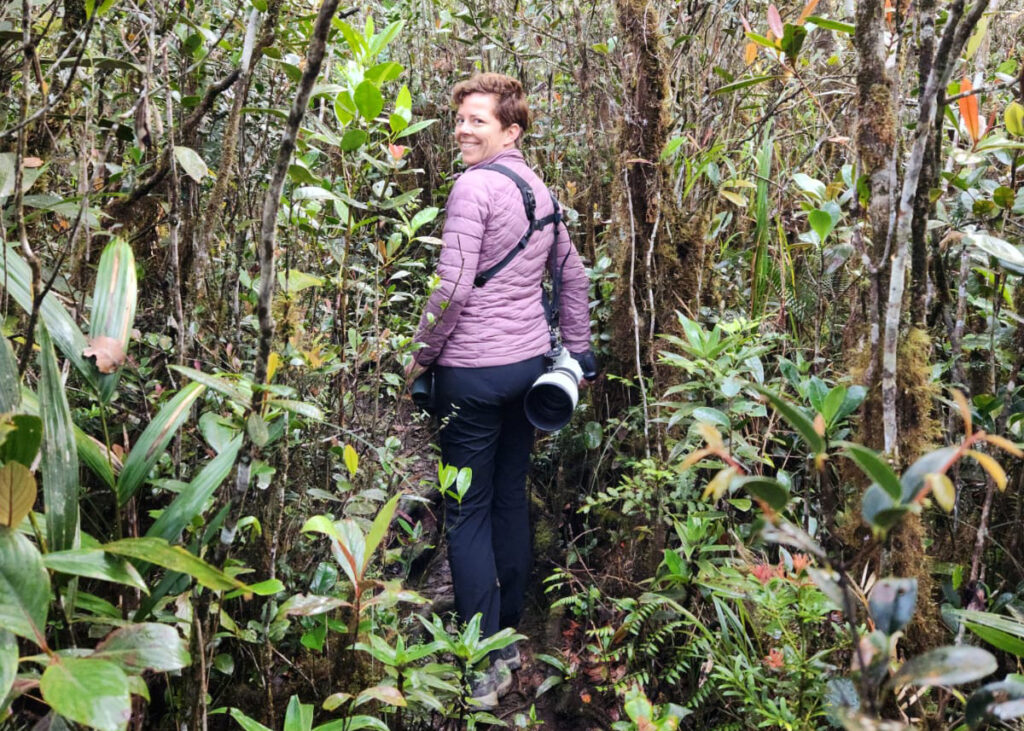
Join us on our very first adventure camping trip — and where better to begin than in Kenya, East Africa? This journey is designed for travelers who crave a more adventurous, immersive experience. We’ll be camping near lakes and in the mountains of this enchanting country, with views toward Mt. Kilimanjaro and hippos grazing just outside the fence.
Our tents and transport will be basic (we’re camping, not glamping), but the reward is complete immersion in Kenya’s breathtaking landscapes and an unparalleled closeness to birds and other wildlife. You’ll walk through the African savannah and hike along lake shores, through forested trails, and up to the impressive 74-meter Nyahururu Falls.
If waking up to the sounds of the bush with a hot cup of coffee, tea, or hot chocolate in hand sounds like your kind of morning, then this is the trip for you.
Kenya straddles the famous Great Rift Valley, home to shifting tectonic plates, blessedly inactive volcanoes, and stunning lakes. Lake Victoria may be the most famous, but we’ll be taking you to Lakes Baringo and Naivasha, home to stunning populations of endemic birds as well the destination for many migratory birds.
We’ll also take you up into Kenya’s mountainous highlands and stunning rainforests. You’ll be staying at campgrounds in the middle of nature, where more often than not you’ll be able to spot the birds right from your tent!
We’ll be spotting Flamingo’s in the lakes, Verreaux’ and African Fish Eagle overhead, and search for the elusive, range-restricted endemic Aberdares Cisticola, the range-restricted endemic Kikuyu White-eye and (near-)endemic Jackson’s Spurfowl.
And yes of course, there will be Elephants, Hippo, Giraffes, Zebra and even Lions. And not to forget, a view of the fabulous Mt Kilimanjaro just across the border.
Please note that while the general itinerary is set, hotels, camp grounds and daily activities may slightly differ depending on circumstances. For a more detailed list of inclusions and exclusions, please take a look at out website.
We’ll collect you from the airport and take you to your accommodation, a beautiful camp ground with views of the Great Rift Valley and an infinity pool to relax after your trip. Take a swim or sit on the terrace with your binoculars for a chance at Bulbuls, Weavers, Bee-eaters, Wagtails, Speckled and Blue-naped Mousebird, a whole variety of Sunbirds and the omnipresent but aptly named Superb Starling. We’ll be sleeping in tents, but to recover from what may have been a long flight, we’ll make sure the tents have beds tonight. We’ll gather together in the evening to introduce ourselves and go over the particulars of the trip.
This morning we’ll get into our safari truck for the first time and drive down to Amboseli National Park. There is no greater introduction imaginable to the African savannah than Amboseli, close to the border with Tanzania and with truly breath-taking views of Mount Kilimanjaro. We’ll be birding outside the park today, so that tomorrow we can have a full day—morning to evening—to make the most of the park itself. We’ll make our way to the camp on the edge of the park, where we can hike all day while our tents are set up for us and our lunch and dinner is cooked. We may come across Helmeted Guineafowl, but be quick, because they run off fast. Francolins are a common sight as well, and keep an eye out for Red-eyed and Namaque Dove. Kori Bustards and Secretarybirds also roam around the Amboseli savannah, and with some luck we might run into a few Ostriches. Keep an eye on the sky for raptors as well, such as Rüppel’s Griffon, Black-winged Kite, Martial Eagle, Bateleur, or Lappet-faced and White-backed Vulture.
Today we enter the park for a full day of exploration. Exiting the vehicle in national parks is restricted to certain locations, so today will be more of a “traditional” safari. Amboseli is known as the “Home of the African Elephant”, so prepare to encounter these gentle giants. If we’re lucky, we may spot one of the great herds on the edge of the swamps or near Lake Amboseli. Other common game at Amboseli are lions, buffalo, wildebeest, Masai Giraffes, zebra’s, hyena’s. Even the elusive leopard calls Amboseli home, although spotting one can be a challenge. The Amboseli ecosystem has a rich birdlife with over 400 species recorded, of which 40 are birds of prey. We’ll stop at Observation Hill-Nomatior, which offers a panoramic view of the Park and hiking it is worth the effort. From here we may spot Greater Flamingo and Black-headed Heron down at the water, but also Gray-headed Kingfisher, African Sacred Ibis, Yellow-necked Spurfowl, the majestic Gray-crowned Crane, the elegant African Jacana and three species of Ibis.
After another morning’s birding, we drive back to our base camp on the edge of the Great Rift Valley, from where we’ll be continuing down into the heat of Lake Magadi tomorrow.
From base camp we take a drive to Lake Magadi, the southernmost lake in the Great Rift Valley—Kenya boasts over 60 lakes in total—and a saline, alkaline lake that is particularly well known for its many wading birds, including Greater Flamingo. In contrast, the lake is home to only one single species of fish. Time and mood permitting, we can stop over at Olorgesaillie Prehistoric site, the “factory of stone tools” where we can admire the many tools found there that were used by our distant ancestors. We can take a walk along the nature trail to spot Weavers, Blue-capped Cordonbleu, Lilac-breasted Rollers, Oxpeckers, Red-billed Quelea and many more.
This morning we walk around the camp ground—a community conservation resource center—to spot Chestnut-bellied and Black-faced Sandgrouse, Kori Bustard, Wood Sandpipers and two species of Hornbill (African Gray and Von der Decken’s). If the heat becomes too much, a dip in the river is in the cards. In the late afternoon we get back in the truck to explore Lake Magadi itself. As mentioned, it plays host to Flamingo, but also to other waders such as the stunning African Sacred Ibis and the diminutive but gorgeous Little Heron. If we’re in luck we might spot a Nubian Woodpecker too.
After another morning walk we drive back towards Nairobi, but we turn north before we get back to the city. Between Ngong Hills and Mount Suswa—a dormant volcano with spiritual meaning to the Masai people—we make our way to another lake: Naivasha,.Unlike its southern neighbour, Lake Naivasha is a freshwater lake, with an entirely different ecology. We’ll have an easy afternoon at the campground. While our cook gets to work, you’re free to roam around and grab a drink at the bar (not included). Tonight, you’ll be listening to the hippos roaming around just outside the electric fence that surrounds the camp.
From our camp we take a boat ride along the shores of Lake Naivasha. Along the way we’re certain to spot the many African Fish Eagle that nest here. Gray, Black, and Goliath Heron may pop up too, as well as Great and Little Egret. And of course there are Spoonbills and Pelicans (both Great White and Pink-backed) to look for. When we get to Crescent Island, we get out for a walk among the animals. We’ll take a stroll with Giraffes, Impala, Zebra, Gazelles, Bushbuck, and Ostriches. And watch out that you don’t trip over one of the tortoises. While Fish Eagle soar overhead, we’ll be on the lookout for African Paradise-Flycatcher, Buff-bellied and Gray-capped Warbler, Purple Heron, Red-fronted Barbet, White-headed Buffalo-Weaver, and the many other (7!) species of Weaver that nest in the trees of the island. Also keep your eyes open for the four species of Sunbirds and the Greater Honeyguide.
From Lake Naivasha we head north through the Great Rift Valley. We’ll stop for lunch at Lake Elementaita, a shallow, alkaline lake known for its diverse birdlife, including flamingos and pelicans, and its importance as a breeding and feeding ground for threatened bird species. After lunch we’ll continue north to Lake Baringo, the only other freshwater lake in the valley, aside from Naivasha. Like the other lakes in the valley, it is home to a population of Greater Flamingo—attracted by the algae in the water—, and also boasts a whole host of other water birds, such as Gray, Goliath and Squacco Heron, Yellow-billed Egrets, African Darters, Reed Cormorants. Overhead Verreaux and African Fish Eagles soar, and maybe we’ll spot Shikra or Pygmy Falcon.
Today we’ll hike and boat around Lake Baringo, looking for some of its more unique species, like the African Skimmer and Lichtenstein’s Sandgrouse. Tonight we may have a chance at Standard-winged Nightjar—Lake Baringo is at the edge of its distribution area—as well as African Scops-Owl. We may also have a shot at seeing Greater Kudu today on the side of the hills surrounding the lake: Lake Baringo is unfortunately their last stronghold in Kenya. In the lake hippos and Nile crocodiles abound in the lake, and the chattering of Vervet Monkeys and the barks of Baboons are common music.
Today we start leaving the lakes behind us and are heading into the foothills of the Aberdares mountain range in Central Kenya. Before we get to the forest reserve itself, we’ll stop over at Nyahuru (or Thomson) Falls for some hiking and birding, and enjoying the beautiful 74m (243ft) fall itself. We’ll be looking for Hartlaub’s Turaco, Red-winged Starling, Black-headed Oriole, Silvery-cheeked Hornbill and a smattering of Sunbirds. We may also encounter Eurasian Moorhen, Red-knobbed Coot, various species of Lapwings and Cormorants, and of course Herons, Ibises, Spoonbills and Storks. We’ll also keep an eye out for some of our smaller bird friends, like the Rattling Cisticola, Red-cheeked Cordonbleu, African Pipit, White-Eyed Slaty Flycatcher, the Kikuyu White-eye — whose range is restricted to the Kenyan highlands. Peregrine Falcons have been spotted here, as well as Augur and Mountain Buzzard. And watch for that flash of color as a Pied, Giant or Malachite Kingfisher shoots by!
We head into the Aberdare Mountain Range proper for the next two days, an isolated volcanic mountain range lnown locally as Nyandarua. The Aberdares include some seriously high peaks with Ol Donyo Lesatima (3,999m/13,120ft) and Kinangop (3,906m/12,814ft) and is covered in dense tropical forests, deep ravines, and spectacular waterfalls. The range is characterized by high-altitude moorlands and dramatic volcanic formations, with deep ravines and spectacular waterfalls like Karuru Falls and Gura Falls. Our main target the next two days will be the highly range-restricted and unfortunately vulnerable Aberdares Cisticola. We’ll also be searching for the elusive, near-endemic—or possibly even endemic—Jackson’s Spurfowl. Other possibilities are the gorgeous Hartlaub’s Turaco, Sunbirds such as the Golden-winged, African Paradise-Flycatcher, and the Moustached Tinkerbird.
Today we leave the mountains behind us, hopefully with a view of Kenya’s highest mountain, Mt Kenya. As we drive back to the city, we’ll have a chance to stop along the way for some last-minute pick-ups, for example along the Sagana River. We’ll be dropped at our simple but nice hotel close to the airport for dinner as we say goodbye to our sturdy truck and our tents. Tonight, we’ll be back in regular beds as you prepare to say goodbye to this breathtaking East African country.
Our trip ends today with breakfast, and we’ll make sure you get dropped back at the airport in time for your flight. Unless of course you want to stay a few extra nights? That can always be arranged, just ask us!